A cream can look like a single, quiet material. Its structure tells a more interesting story: one liquid distributed through another, with a large amount of interface hidden inside a small jar.
Two phases, one product
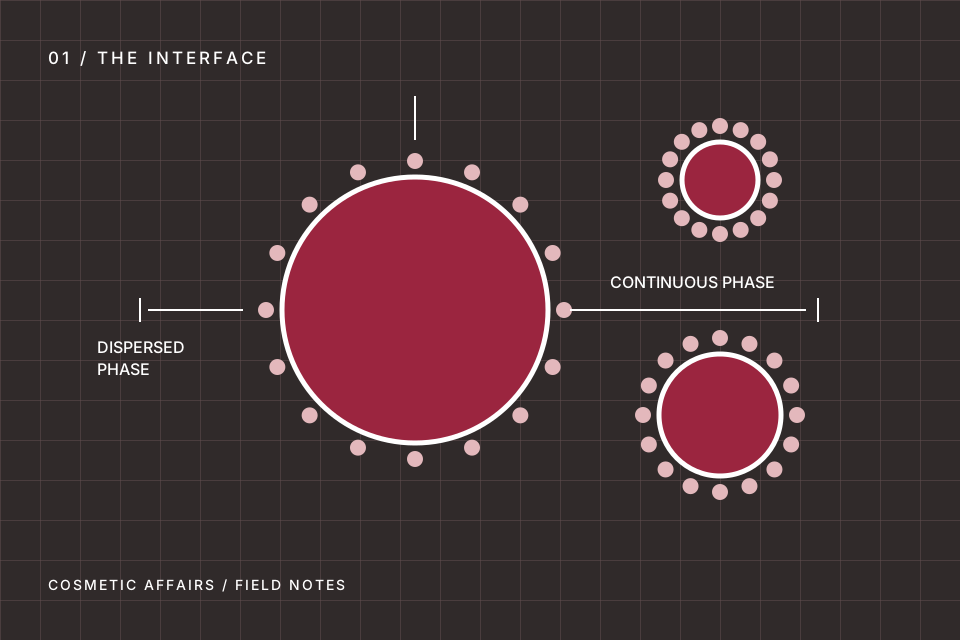
In IUPAC’s terminology, an emulsion has a liquid continuous phase containing dispersed liquid droplets, liquid crystals, or both. An aqueous continuous phase gives the familiar oil-in-water notation; an oil continuous phase gives water-in-oil. Read the IUPAC definition.
That distinction gives us a useful starting point. Rather than thinking of an emulsion as oil and water simply mixed together, imagine a population of droplets and the material surrounding them.
Why the interface is worth drawing
A sketch can turn an abstract description into a question you can discuss. Which phase surrounds the droplets? Where does one material meet the other? What would you need to know before making a claim about stability?
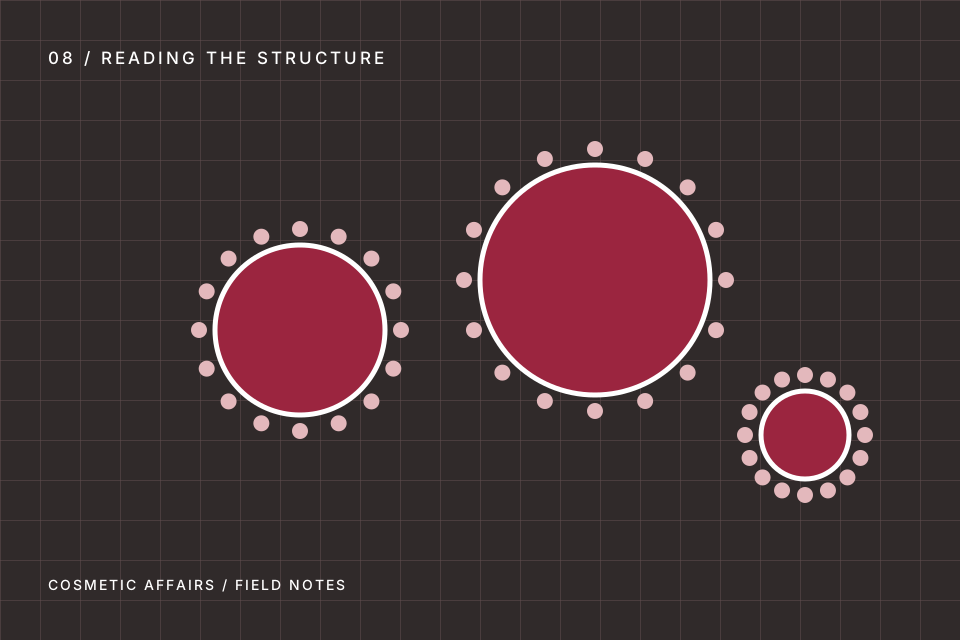
The drawing is a way to organize those questions. It does not replace an experimental observation or establish how a particular product will perform.
Structure comes before the story
For an editorial discussion of a formula, it helps to separate three kinds of description:
| What we describe | A useful question |
|---|---|
| Composition | Which materials are present? |
| Structure | How are those materials arranged? |
| Observation | What was measured or seen, and under what conditions? |
A smooth appearance is an observation. A proposed explanation for that appearance is a separate statement. Keeping them distinct makes a formulation notebook easier to read and a technical conversation easier to follow.
Further reading
- IUPAC Gold Book: emulsion — terminology and phase notation.
This is an introductory reading exercise, rather than a recipe or a validated manufacturing procedure.